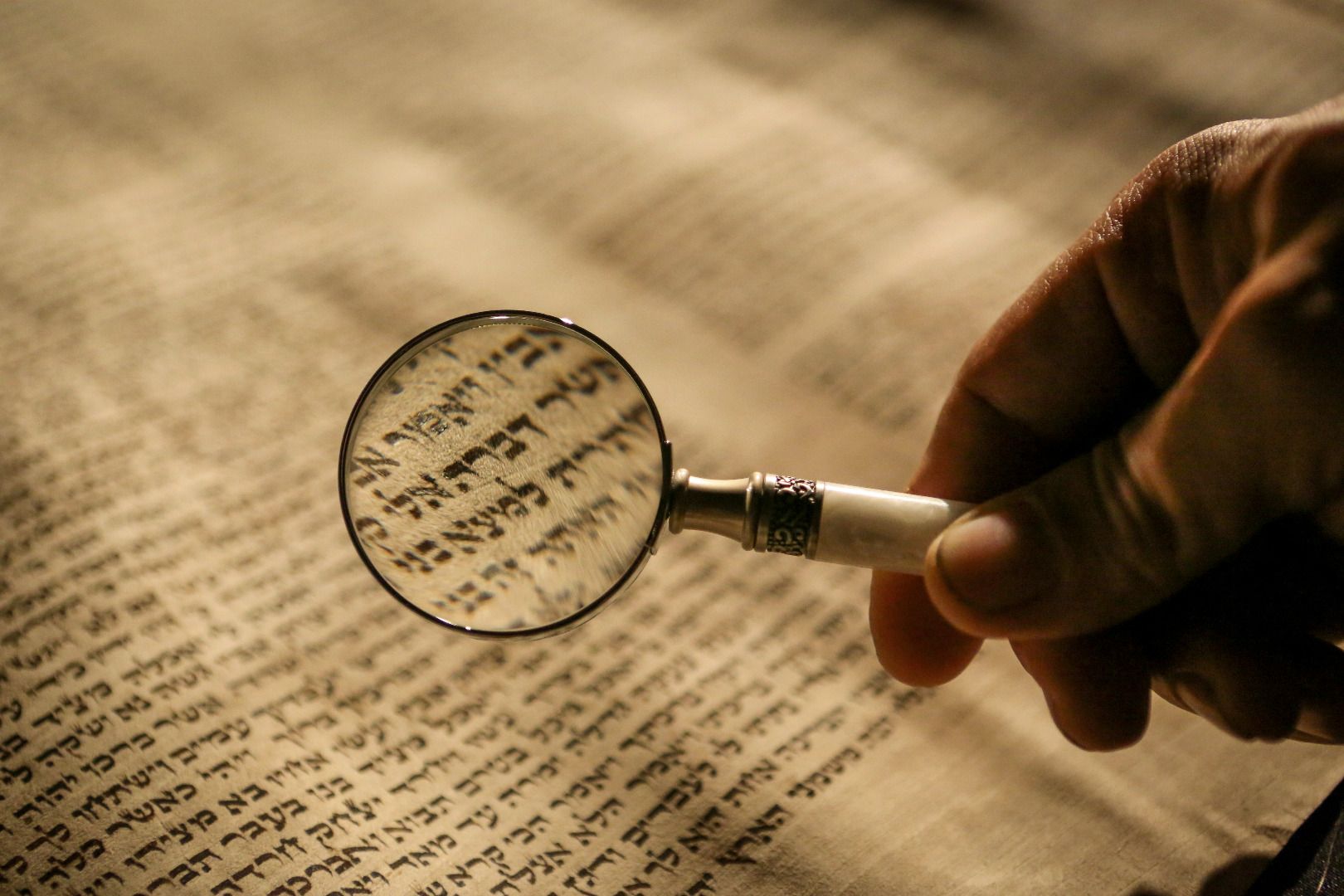
Language is a multipurpose tool. It has structure and logic, yet its malleability allows it to adapt and evolve. Even nearly extinct ones have been transformed or brought back to life. The revival of Hebrew is just one example, but there’s an extraordinary story behind this language’s journey. Once alive only in scripture and liturgical contexts, its modern development owes much to humanity’s curiosity and indomitable spirit.
A Quick History of Ancient Hebrew
Classical Hebrew as we know it survived in the Tanakh, the collection of religious texts that includes the Torah, Nevi'im, and Ketuvim. The Torah consists of the Five Books of Moses: Genesis, Exodus, Leviticus, Numbers, and Deuteronomy. Nevi'im, which means “Prophets,” contains the major and minor prophetic books plus Joshua, Judges, Samuel, and Kings. Ketuvim, which translates as “Writings,” contains everything else: Psalms, Proverbs, Song of Songs, Esther, Chronicles, and more.
From there, Hebrew changed over time until it fell out of common use around the third or fourth century C.E. It survived through rabbinic literature such as the Talmud and the Midrash. The Encyclopedia Britannica mentions its further development in liturgical poetry during the Middle Ages. As a spoken language, Hebrew fell out of usage during the ninth century C.E. It would not see a major revival until the 1800s.
The Revival of Spoken Hebrew
While many events contributed to its new rise in popularity, lexicographer Eliezer Ben-Yehuda helped drive this development. Born Eliezer Perelman in 1858, Ben-Yehuda compiled the first Hebrew dictionary and edited several Hebrew language publications. His deep interest in the language began as a young boy; My Jewish Learning explains that Ben-Yehuda was exposed to secular literature by the head of the religious school he attended. After leaving the yeshiva, he continued to read many Hebrew periodicals.
In the late 1800s, Jewish people used Hebrew when they couldn’t adequately express their ideas in their typical day-to-day languages such as Yiddish, French, or Arabic. The version of Hebrew they spoke was left over from medieval times. For Ben-Yehuda, Hebrew was an essential key to Israel's rebirth. Becoming an independent state required a national language, and modern Hebrew was the logical answer.
Inspired to revive the language, Ben-Yehuda moved to Palestine in 1881. He attempted to blend in with the Orthodox community, but observant Jewish people there believed that Hebrew was a sacred language that should not be used in secular contexts. They shunned Ben-Yehuda, but he reached out to other secular Jewish people living there and advocated speaking only Hebrew in their homes. His son, Ben-Zion Ben-Yehuda, is believed to be the first child raised speaking modern Hebrew. He began publishing the first modern Hebrew dictionary in 1910 and continued his work on reviving the language until his death in 1922.
Bringing Hebrew Into the 20th and 21st Centuries
Ben-Yehuda had made significant strides in bringing modern Hebrew to life, but more challenges remained. Norman Berdichevsky, author of “Modern Hebrew: The Epic Transformation of a Language,” reveals that Haifa’s Technion institute adopted Hebrew as its official language in 1913. The former Soviet Union persecuted the use of Hebrew during the mid-20th century as antithetical to the interests of the working class. In response, Soviet Jews learned the language in secret.
These moves, plus the development of Israel as an independent nation, helped boost contemporary Hebrew’s growth. Over the course of time, its vocabulary has significantly expanded. Berdichevsky also divulges that modern Hebrew now uses a standard pronunciation schema, as well as a system of tenses influenced by Indo-European languages.
Language Helps Transform a People
Languages reflect their cultures of origin, but they also carry marks of their civilizations’ histories. After centuries of near disuse, Hebrew is once again a major language. Its revival reflects dedication, effort, and links to an essential piece of cultural identity.