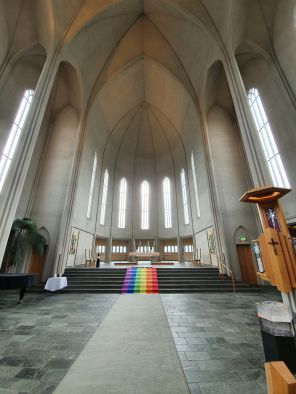
Even though Canada is well ahead of the rest of the world when it comes to LGBT rights, many of the traditional churches in Canada still struggle with how to come to terms with what has long been considered a “sin” in Christian tenets. One church, the United Church of Canada, came to a compromise and allows some of its congregations to bless same-sex unions, while the Roman Catholic Church lags behind in the dialogue. The Canadian Anglican Church has been a pioneer in same-sex unions. The Diocese of New Westminster authorized a rite for the blessing of same-sex unions in 2002, three years before Canada became the first country in the Americas to legalize same-sex unions. In 2012, two dioceses ordained openly gay individuals, again demonstrating the commitment of inclusion in the Anglican community. The road to changing the marriage canon has not been an easy one, but changes are happening.
The 2004 Resolution
In 2003, six parishes in the Diocese of New Westminster received authorization to use the marriage rite, which was not traditionally a marriage ceremony, but a blessing. The following year, the General Synod of the Anglican Church of Canada passed a resolution for the Synod to “affirm the integrity and sanctity of committed adult same sex relationships.” This opened the dialogue in the leadership of the church to look at how the church would approach same-sex unions. This resolution was not without its opponents, and the bishop of New Westminster agreed not to encourage same-sex blessings in more parishes, but he refused to curtail the practice in those parishes that had already been granted permission to perform the rite.
The dialogue continued in the church, but the Diocese of New Westminster did not step down from its position on LGBT rights. In 2007, the Diocese Synod passed a resolution stating that sacraments of the church, such as Communion or Baptism, would not be denied based on an individual’s sexual orientation or that of his/her parents. This caused some backlash within the national church. Still, the same year, the vote to affirm the blessing of same-sex unions went to the General Synod. It passed in the orders of the clergy and laity but was defeated by the order of bishops. Subsequently, the Synod passed a motion to make proposals to the marriage canon.
Was the Vote For or Against?
The General Synod met in 2013 to consider the issue on same-sex unions but postponed the vote until the next Synod meeting in 2016. In the ensuing years, the Episcopal Church (the U.S. branch of the Anglican Church) would vote to change its marriage canon, allowing priests to marry and bless same-sex unions in the church. The Scottish Episcopal church voted to remove a clause in its marriage canon that states marriage is between a man and woman.
When the General Synod of the Anglican Church of Canada met this month, the vote occurred. The first reports that came out of the meeting said that the resolution failed. The resolution required two-thirds vote from each of the three orders, the lay, clergy and bishops. This time, it was the clergy order that failed to receive a two-thirds majority, missing just one vote. However, the delegates called for a recount of the electronic voting records. The recount showed an error in counting the General Secretary’s vote, which should have counted as clergy. The resolution passed. Archbishop Fred Hiltz offered an apology and told delegates that the resolution did indeed pass.
The next step is an affirmation at the next Synod meeting in 2019 in order for the resolution to become church law, but this is a huge step forward in the Anglican Church. The archbishop knows that the matter is not done, because there are still critics, but this is a victory for the 1.6 million Canadians who identify as Anglican.