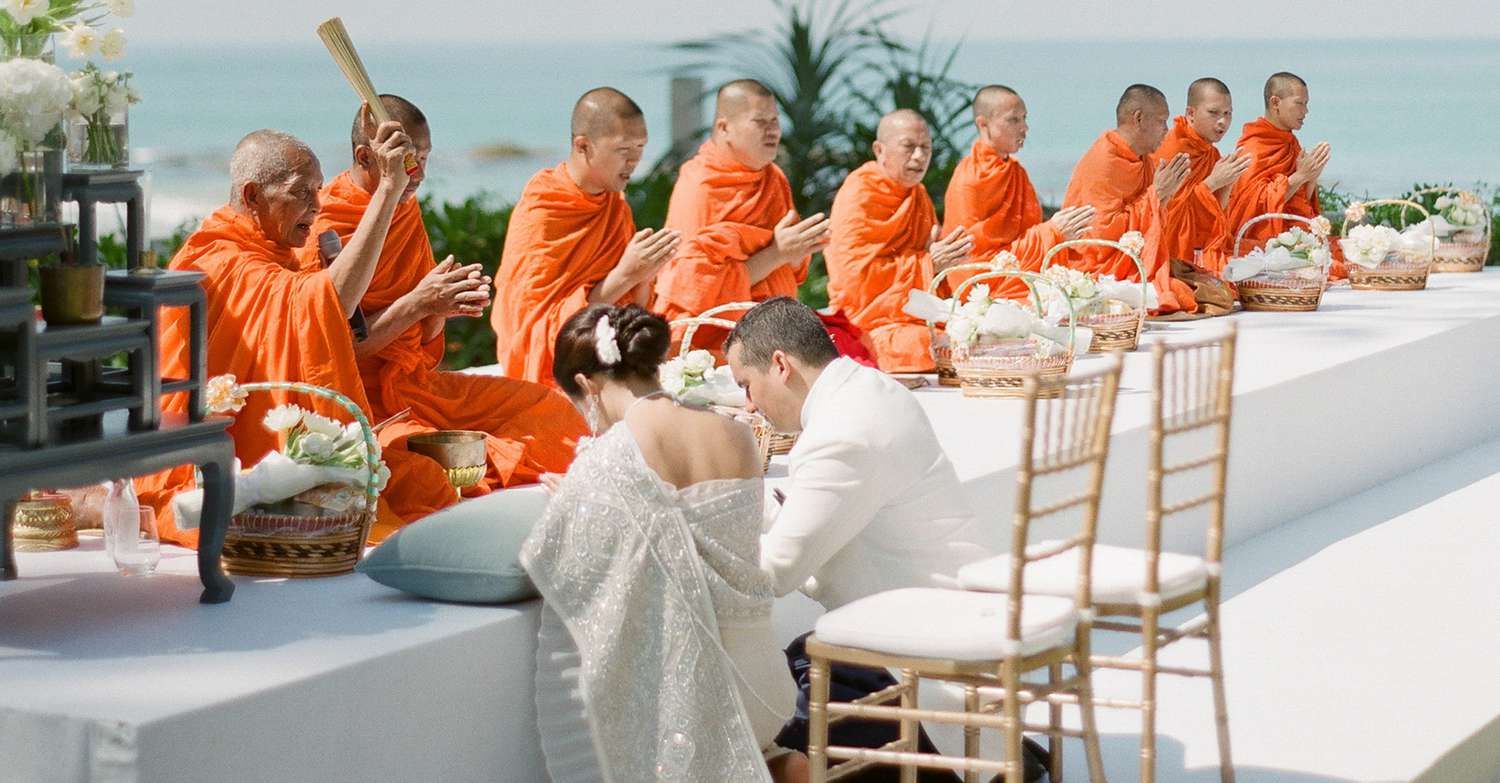
Your Buddhist friends have approached you about performing their wedding. However, you don’t have a clue about Buddhist wedding customs. Don’t worry — Buddhist weddings blend traditional rituals with modern practices. All you need is to be educated on the traditions, and you should be all set.
Buddhist Wedding Beliefs
Buddhists believe that marriage is secular; it’s not a sacrament like it is in other faiths. There’s no strict interpretation of the ceremony because it’s not, strictly speaking, a ceremony. However, there are usually some common rituals, such as making offerings to the statue of Buddha.
If you’ve been to one Buddhist wedding, you’ve seen one Buddhist wedding — the rites vary widely depending on the cultural heritage of the happy couple. For example, you may see the happy couple share sake with their parents at one ceremony; at another, they’ll be sharing tea. Other ceremonies skip the sharing of a beverage altogether.
Buddhist Wedding Traditions
There’s no such thing as right or wrong when it comes to Buddhist weddings. There are only teachings from Buddha about how to have a happy marriage. Couples can blend ancient traditions — such as lighting incense sticks to honor their ancestors — with modern-day flair — such as having an elaborate wedding cake or wearing a white dress and tuxedo.
Even if you’ve never seen a Buddhist wedding, much less officiated one, don’t worry. These weddings are meant to be joyful, happy occasions. If you keep that in mind, you’re a step ahead of the game.
It may surprise you to learn that Buddhist religious figures, such as monks and lamas, don’t usually perform weddings. They may be asked to attend and bless the happy couple and their new life together; however, they will otherwise keep to the background throughout the ceremony.
Also, Buddhist weddings don’t generally take place in a temple. They’re normally held at home or in a rented location. That’s why you may be invited to officiate a Buddhist wedding.
Officiating a Buddhist Wedding
You may want to think about writing the ceremony with the spouses-to-be. You could also write it entirely on your own if the couple approves. Here are some important elements you may want to include:
- You could lead a guided meditation to center the happy couple and focus their energy on loving kindness for each other — and to focus the wedding guests’ energies on good wishes for a happy marriage.
- “Buddhism is how you transform your inner potential.”
- “Buddhism is a journey of serving others, helping them wake up their own potential.”
- “Marriage is a way to practice serving others, since you will serve each other as spouse and spouse.”
- “I, bride/groom, take you, bride/groom, to be my husband/wife, my partner in all things, and my one true love. I will treasure our friendship and love you more every day throughout our married life.”
- “I will trust and honor you always.”
- “I will share joy and sorrow with you.”
- “Through sickness and through health, through the hard and the easy, whatever comes along, I will always be there for you.”
- “As I have extended my hand for you to always hold, so I now extend to you my life to keep.”
You should also include some Buddhist readings and teachings, either chosen by you or by family, friends, and any visiting monks. These can include writings by the Dalai Lama or Dōgen, or passages from the Sigalovada Sutta, which contains Buddha’s wisdom on how to have a happy marriage.
Being asked to officiate a Buddhist wedding is a great honor. With a little bit of preparation and research, and a conversation or three with the happy couple, you can become part of the story of their marriage for years to come.