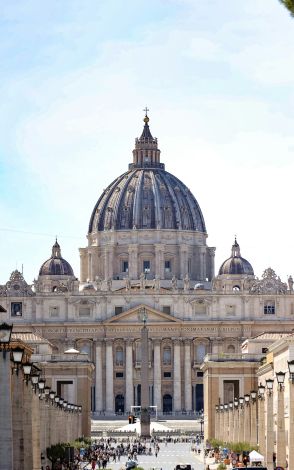
The Catholic Church has been around for a long time and has several sacred ceremonies and rites that are still in use today. The church also has a violent political history, including the fact that it played a central role in colonial conquests around the world. While the modern Catholic practitioner might see that part of the church's legacy as a distant relic, the impacts of the Catholic Church's doctrines are very present in the lives of Canada's indigenous peoples. As of March 30, 2023, First Nations communities are applauding the Pope's rejection of the Doctrine of Discovery as a step in the right direction.
What Is the Doctrine of Discovery?
The Vatican created the Doctrine of Discovery in the 15th century. During that time, European explorers wanted to travel to new places to steal resources and enslave other people. The Catholic Church justified all the violence, theft, and slavery by proclaiming that the early colonizers could conquer and control any land, resources, and people they came across as long as those places didn't have European Catholics living there.
Essentially, the Doctrine of Discovery laid the foundation for the colonization and exploitation of the territories that people now call Canada, the United States, Australia, and New Zealand. With this doctrine, the Catholic Church sent a message that indigenous people were not people because they were not Christian.
How Did the Doctrine Impact Canada's Indigenous Communities?
The Catholic Church's Doctrine of Discovery impacted Canada's indigenous communities severely and caused lasting harm that is still felt today. A few key effects of the doctrine:
- Permitted colonizers to steal and control indigenous land
- Asserted that non-Christian peoples did not have the same rights as Christians
- Justified the subjugation and genocide of native peoples
- Set the foundation for the residential school system
Why Does It Matter That the Pope Rejected the Doctrine?
The rejection of the Doctrine of Discovery by Pope Francis sends a new message about how the Catholic Church views its relationship with indigenous people. Native peoples across the Americas, Australia, and New Zealand have demanded this kind of action from the church for decades. The Pope and the Vatican hold a powerful position of influence in the world, and Canada's indigenous peoples have argued that they deserve recognition and respect from the church as an institution.
With this move, the Catholic Church is openly acknowledging that its treatment of indigenous peoples was wrong. Since the Doctrine of Discovery formed the basis of land title and other laws in Canada, this announcement is also a move toward rejecting the foundation of those laws.
What Are the Next Steps in the Reconciliation Process?
While Canada's First Nations communities are pleased with Pope Francis's stance on the Doctrine of Discovery, they see it as only the first step in the reconciliation process. Obviously, the Catholic Church has no tangible political power over Canada today, so the rejection of the doctrine is mostly symbolic. If the Canadian government also decided to denounce the Doctrine of Discovery, the move would impact laws on a national level. First Nations communities will continue to demand this action from the Canadian government. The way forward for Canada's indigenous people involves the return of stolen land and reparations for centuries of genocidal policies.
At this point, the Pope's acknowledgment of the wrongs of colonization may signal that the tides are shifting in favor of a future where indigenous people enjoy full sovereignty as nations with an equal standing on the world's stage. First Nations leaders have been organizing for a long time and fighting for their rights, and the Pope's rejection of the Doctrine of Discovery is a welcome moment of progress.